Scoring sessions
Keep score between rounds
The game scores each round internally; the match calculator gives you a transparent percentage you can compare across packs and friends.
One hub for the whole game: the answer-and-guess loop, group sessions, pack choices, custom questions, and the boundaries that keep the game fun.
The whole game in one paragraph
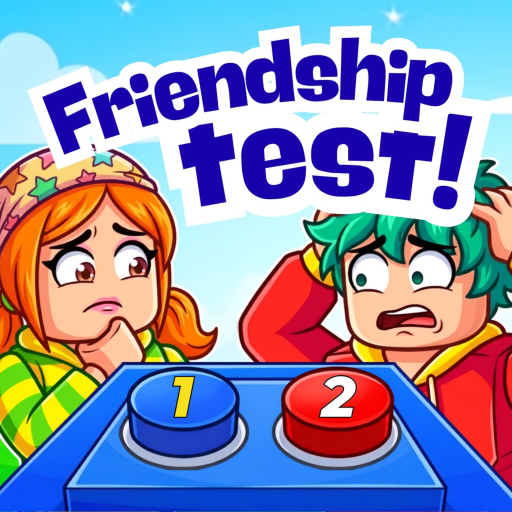
Do You Really Know Me? — the Roblox experience created by duusten, retitled “Friendship Test!” by the September 25, 2026 listing update and rechecked October 3 — is a social quiz for two to a small group. Each round, players answer the same questions about themselves; then everyone guesses what the others picked. Matches score, and the game closes the round with its own result: the current listing deals a Friendship Card rank from Stranger to Best Friends, and the older listing described a Compatibility Score and verdict. Content comes from built-in question packs — the listing has named Classic, Crush, Truth or Dare, Secrets & Tea, Sleepover, Gamer, and Food, with Would You Rather and Deep Talk named in the newest description — plus custom quizzes you write yourselves. Pranks, an emote pack, and daily free-pack rewards fill the space between rounds. Everything on this site is built around that loop.
Pick the row that matches your group; the third column is the usual next click.
| Your situation | Start with | Then |
|---|---|---|
| Two of us, first round tonight | How to play | Calculator to score rematches |
| Three to eight players | Party Mode guide | Pack comparison for the group's tone |
| We keep picking the same pack | Packs guide | Question ideas by audience |
| We want our own questions | Quiz maker | Safety checklist before playing |
| Playing with people we just met | Safety guide | Easy prompts from the questions hub |
Each card below is the short version of a full page — open the page when the summary matches your task.
The core game is a four-step loop for two people: choose a question pack and a question count, answer the questions about yourself, guess your partner's answers while they do the same, then reveal. The game highlights each match and closes the round with its own Compatibility Score and verdict. The guide walks each step with what the official listing documents and flags the parts — exact score math, verdict thresholds — that the game resolves on its own screen.
Open the guide →Group sessionsFor groups, the documented mode is Party Mode: the older official description supported 3-8 players and used a roulette to choose a STAR each round, while everyone else guesses that person's answers. The guide covers what that means for turn order, how to keep the pace up with more players, and a host checklist — boundaries, group size, and prompt choice — so the session starts fast instead of stalling in the menu.
Open the guide →Privacy checklistCustom quizzes are the game's most social feature and its easiest way to make someone uncomfortable by accident. The safety guide's rule is simple: write questions you would be happy for the whole server to read. It walks through the categories to leave out — full names, schools, addresses, family details, anything that locates a player offline — and how to replace a risky prompt with a funny one that scores the same in the guess-and-match loop.
Open the guide →Original promptsThe questions hub collects original, safety-reviewed prompt sets in three tones — easy icebreakers, funny, and thoughtful — across three audiences: best friends, a crush, and sleepover groups. Each set is playable as-is in a custom quiz or mixed into a round when the built-in packs start repeating. The best-friends set leans on shared habits and histories, the crush set stays light and preference-based, and the sleepover set is built for a group that will be in one room all night.
Open the guide →Built-in contentThe listing has advertised 14 question packs and named seven: Classic, Crush, Truth or Dare, Secrets & Tea, Sleepover, Gamer, and Food — while the description checked on October 3, 2026 names Would You Rather, Deep Talk, and Sleepover as examples. The packs guide compares the named themes by group fit and comfort level instead of pretending an objective ranking exists, and shows which name came from which dated source.
Open the guide →Build your ownThe quiz-maker tool assembles a custom prompt list in your browser from the site's original question bank: pick an audience and a tone, drop any prompt you dislike, and export the list to read out or type into the game's custom-quiz feature. Nothing is uploaded — the list lives on your device — which is why the safety checklist sits one click away in the same tool flow.
Open the guide →The game scores each round internally; the match calculator gives you a transparent percentage you can compare across packs and friends.
The game has retitled its Roblox page twice — 2-8 players, then 2-6, now 2-4 — and rewritten its description with new pack names. The updates page keeps the dated timeline.
It is a Roblox friendship quiz by the creator duusten: you answer questions about yourself, your friends guess what you picked, and the reveal scores the matches — the current listing wraps that in a Friendship Card rank that runs from Stranger to Best Friends.
Two players should start with the how-to-play guide; a group of three or more should start with Party Mode. If you already know the loop and want better rounds, go straight to the packs comparison or the question ideas.
Yes, once per group. The game supports custom quizzes, which means players write the questions — the safety guide's one-minute checklist keeps names, schools, and locations out of the prompt list before a younger group starts playing.
That is now an open conflict: the older documented listing described a 3-8 player Party Mode with a roulette-chosen STAR, while the title since the September 25, 2026 update reads 2-4 player quiz and the rewritten description drops the Party Mode wording. Both claims are shown with their dates; for tonight's session, trust the in-game menu and see the updates page for the full timeline.